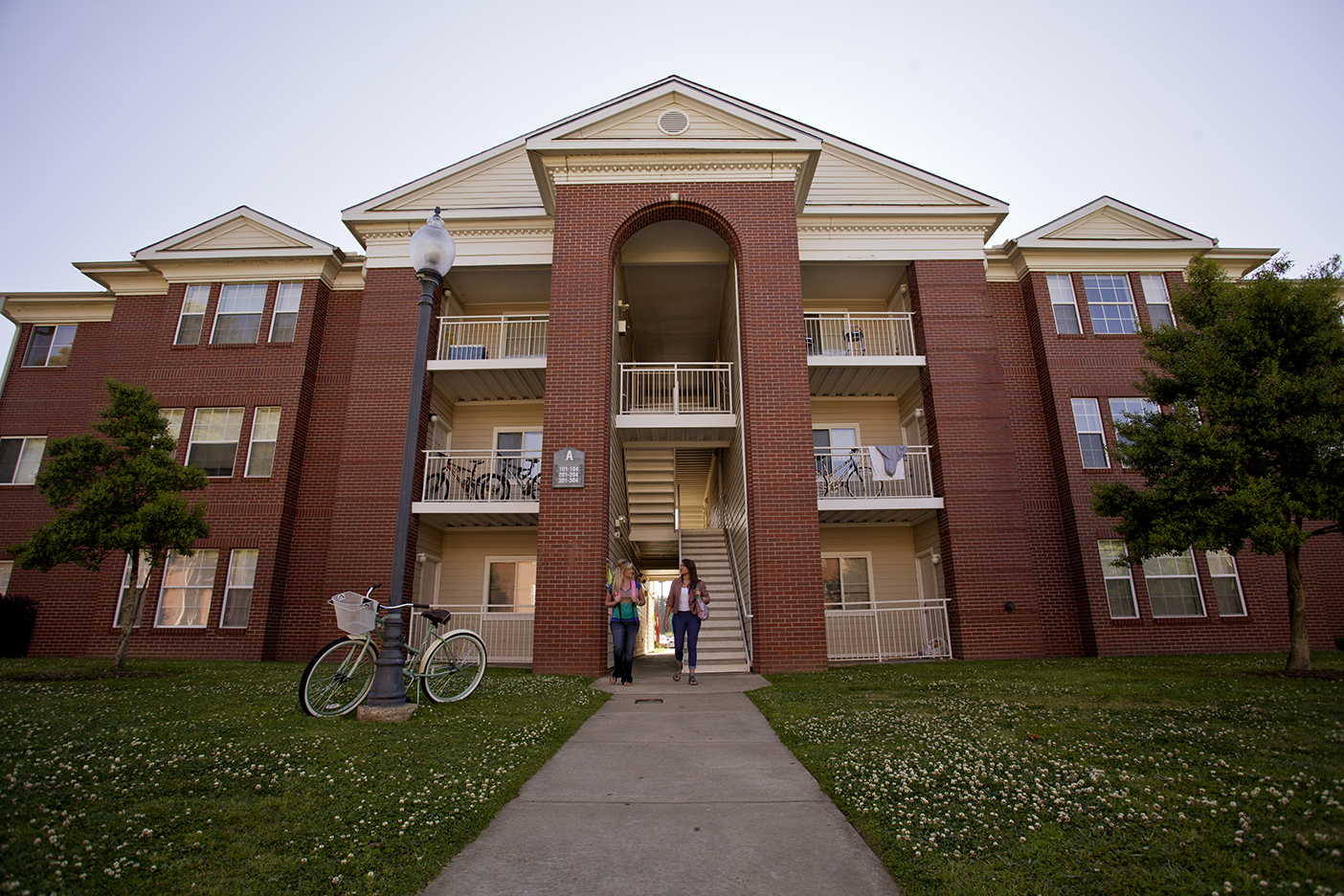
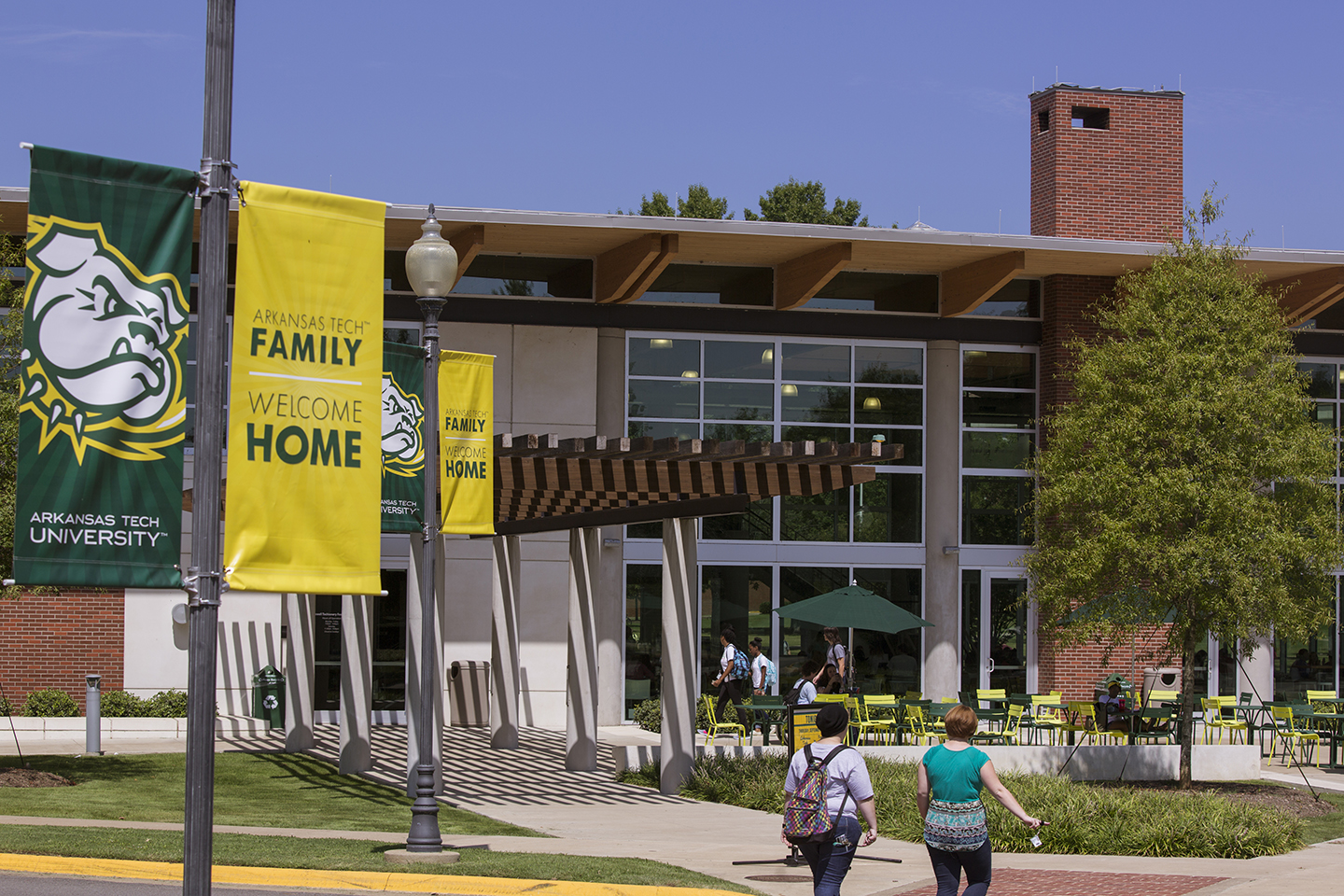
Understanding Disability Access in Housing
The Office of Disability Services is committed to ensuring all students have access
to ATU classes, programs, and services, including residential living and dining. Our
goal is to help students participate in the same campus living opportunities as their
peers by removing barriers inherently related to a disability. Students with disabilities
will also be included in the extracurricular learning that takes place for all college
students who navigate shared spaces, roommate interactions, adjusting to the schedules
of others, prioritizing their own needs when necessary and using the resources available
to meet them, and setting appropriate boundaries with peers. Access may not be granted
in the method preferred by the student making the request, but will be evaluated through
the lens of inclusion as the ultimate goal- whether in one of our various facility
layouts or locations, or through our dining services or meal plans. Regardless of
diagnosis, students benefit from learning to navigate shared living. Residence hall
life can be challenging, but it also builds skills in compromise and negotiation alongside
the opportunity to learn from a wide range of people, cultures, and perspectives.
When a student requests a housing or dining accommodation, Disability Services engages
in an interactive process, asking questions about the nature of the condition and its
symptoms, and considers all available accommodations and supports when making final
accommodation decisions.
Common Campus Living Accommodation Topics and Requests
Single Rooms
A single room is one of the most frequently requested housing accommodations. It's important
to understand the difference between a single room granted as a disability accommodation and one selected as a personal preference.
A single room qualifies as a disability accommodation only when clinical documentation
clearly establishes a history of substantial limitation and explains why a separate
living/sleeping space is necessary for the student to access housing. For example,
a student needing extra space for specialized medical equipment may require a single room's larger
bathroom. An accommodation would be granted to make sure the student has a room assignment that allows for this
space. For students with a preference for a private space, they may request a single
room through the regular housing selection process, with assignments based on seniority
and availability.
Diagnoses such as ADHD, Generalized Anxiety Disorder, and Depression are commonly cited reasons
for requesting a single room. However, these diagnoses alone typically do not constitute a
barrier to accessing the housing program, since students have access to a wide range
of alternative strategies and campus resources to manage their needs.
Animals on Campus
Students who are considering bringing a Service Animal or Emotional Support Animal
to live with them on campus should review the policies and information published on our Service and Emotional Support Animal Policies page.
Meal Plans
There are many food preferences and optimal diets for a variety of health conditions. Here’s
the good news: Chamber’s Cafeteria was created with this in mind and the buffets can
easily be customized to fit many eating styles, with a large salad bar, several hot
buffet options including an Asian-inspired grill station, a Tex-Mex bar, American
and Italian-inspired food lines, a specialty allergen-free zone with items prepared
away from the 8 most common food triggers, and more. These options can easily be adjusted for
eating plans to control calories, macros, high-protein, whole food, or plant-based
eating.
When considering a dining or meal plan accommodation request, remember that our goal
is access, so the available options will be reviewed before consideration of canceling
a meal plan requirement. An accommodation that is often effective when working with
food allergies is for Disability Services to arrange a consultation between the student
and the food service provider to make sure safety needs are understood and establish
direct communication so the student can be served safely and equitably throughout
their stay on campus.
Off-Campus Living Requests
ATU’s policy that students live on campus until they have 60 earned hours or turn
21 years old, with exceptions for students who live near campus, are taking fully online coursework, etc. is intended
to promote the safety, stability, and personal growth of our student population. There are very rare cases when a student who does not
meet the general residency policy exemptions through Res Life may request to live
off campus. As with all accommodations, all on-campus options will be reviewed to
include the student in our programs and services before an exclusion is granted. A
diagnosis or medical provider recommendation alone does not guarantee the request
will be approved. We value the medical and psychological expertise of providers making recommendations,
but also recognize that our housing and meal service staff are the experts on what
we can provide to meet the needs of students within the residential community, and
it is exceedingly rare for a student’s needs to be able to be met in an off-campus
house or apartment but not in a campus apartment or residence hall.
For Housing Accommodation FAQ's, please visit our Housing Accommodations page.
Appeal Process
It is the responsibility of the Disability Services staff to analyze all information
when making equal access decisions. On occasion, a student may not agree with the
identified accommodations made available and offered to the student. As required by
the Americans with Disabilities Act, Disability Services Staff provide students with
a process for prompt review and resolution in such situations.
If a student does not agree with an accommodation decision made by the student’s Disability
Services point of contact, the student may file an appeal through the Disability Services
Appeal Process.
The following steps outline the process.
Step 1:
If informal discussions with Disability Services staff have not resolved the issue,
the student shall submit a written complaint to the Assistant Dean for Student Wellness
(Ashlee Leavell, sleavell8@atu.edu) within ten (10) working days of the issuance of the denial notice or the approval
of alternate disability accommodations (In some cases, the Assistant Dean may need
to defer the complaint to a designee if timelines cannot be met).
Step 2:
The Assistant Dean for Student Wellness, or their designee, shall meet with the individual
within seven (7) working days of the receipt of the complaint. After the meeting,
the Assistant Dean, or designee, will review all available information to see if the
initial decision was reasonable. The Assistant Dean, or designee, will provide the
student with a written decision via ATU email within five (5) working days of the
meeting with the student.
Process Note: When an appeal is being reviewed during Steps 1 – 2 and the student
shares new personal information or documentation that was not provided during the
initial review, the Assistant Dean, or designee, reserves the right to refer the student
back to the student’s initial Disability Services staff point of contact for reassessment
of the situation, as the presence of new information may have impacted the original
decision, had it been shared initially.
Step 3:
If the student would like to have the decision further reviewed after the Step 2 decision,
the student shall notify the 504 Coordinator, Hunter Bramlitt (jbramlitt@atu.edu), in writing within 10 business days of the Step 2 decision. The 504 Coordinator
will make the final decision, reserving the right to shift the process back to the
Office of Disability Services for reassessment if new documentation is introduced
at this point.
Disability Grievance Procedures
Students seeking information about a Discrimination Grievance on the basis of disability
should contact Hunter Bramlitt, who serves as the 504 Coordinator for Arkansas Tech
University.
Hunter Bramlitt
Associate Dean for Student Wellness and ADA/504 Coordinator
Health and Wellness Center
Doc Bryan Student Services Center, Suite 119
Russellville, AR 72801
Phone: 479-968-0329
Email Address: jbramlitt@atu.edu
The full Arkansas Tech Equal Opportunity, Harassment (Sexual Misconduct), and Nondiscrimination
Policy and Procedures can be found here.
Reduced Course Load Accommodation Policy
The purpose of this policy is to define the guidelines for students, staff, and faculty
to follow with regard to a reduced course load accommodation.
For the purposes of this policy, a reduced course load shall be defined as:
A course load of nine (9) or more credit hours in a Fall or Spring semester. Arkansas
Tech University currently defines full-time enrollment as 12 or more credit hours
per Spring or Fall semester.
- A reduced course load accommodation permits a student to register and, for Arkansas
Tech University purposes, be considered a full-time student. Students authorized for
a reduced course load accommodation are entitled to all benefits and services afforded
full‑time students.
- Students seeking a reduced course load must register with the Office of Disability
Services (DS) by formally submitting an online request for the accommodation, and
complete an intake interview with a DS staff member. The DS staff member will review
and evaluate each request on a per semester and case-by-case basis. Supporting documentation
may be required.
- The student’s request will be evaluated in terms of the impact of the disability and
demands of the student’s proposed schedule for that semester.
- The Office of DS will issue a notification letter via One Tech indicating the approved
course load minimum/maximum credit hours, to the appropriate University departments
(for example, Office of the Registrar, Admissions, Residence Life, Athletics Director).
- The DS staff member will review with the student the potential consequences of a reduced
course load (for example, the impact upon financial aid, slower progress towards degree
completion, changes in vocational rehabilitation funding). Students will be referred
to the appropriate department (for example, the Office of Financial Aid, appropriate
academic department) for more information specific to the student’s needs/situation.
- Certain institutional programs and services cannot be modified by this accommodation. For example, pursuant to federal regulations,
federal financial aid will be reduced for students carrying less than twelve hours regardless of the reduced
course load accommodation. For specific information, see http://www.finaid.org/educators/pj/disability.phtml.
- The reduced course load accommodation is valid for one semester only. Students must
request renewal of the accommodation in subsequent semesters so that a determination
can be made regarding the need for continued accommodation.
Printable Version
Course Substitution Request
Students seeking a course substitution due to a disabling condition should review
the ATU Course Substitution Policy for Students with Disabilities and begin their
request by clicking the Apply for Course Substitution button below.
Course Substitution Policy PDF Version
This policy was approved by the ATU Board of Trustees on December 19, 2024.
Apply for Course Substitution
Pregnancy & Related Conditions
ATU is committed to providing appropriate modifications for pregnant students as part
of their protection under Title IX. Below is a link to our information for pregnant
students or those with related conditions and instructors working with them, as well
as resources for students returning to campus after giving birth.
ATU | Pregnancy and Title IX