

PhysicsThe Bachelor of Science in Physics is housed within the College of Natural & Health Sciences with application of mathematical principles to universal study of a variety of scientific subject matters. |
Engineering PhysicsThis program is designed to provide highly technical skills alongside the theoretical knowledge to be successful in a variety of industries. |
The Physics Program offers two degree options leading to a B.S. degree.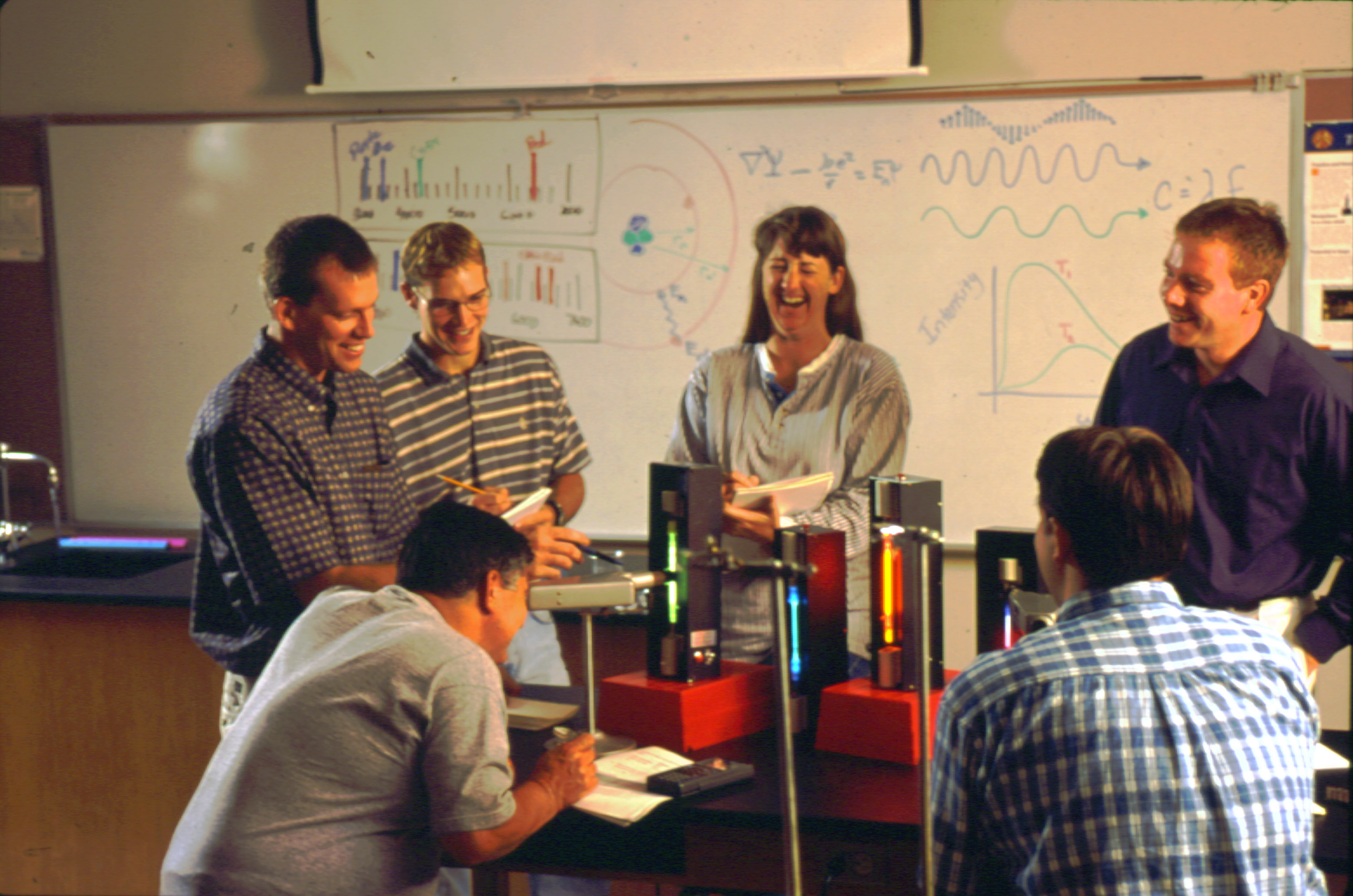
Students graduating with an engineering physics degree will be well qualified for jobs requiring highly technical skills that also require a good theoretical knowledge background. Those interested in employment immediately after graduation will have numerous alternatives for career choices. The degree program will also prepare students for graduate studies in the fields of physics and engineering.
Job opportunities for an engineering physics graduate can include employment in industries such as: McDonnell Douglas/Boeing, Texas Instruments, Honeywell, Microsoft, Polaroid, Union Carbide, National Institute of Standards & Technology, Entergy, Tennessee Valley Authority, and Dow Chemical, etc. Also, government agencies such as NASA, National Bureau of Standards, Office of Naval Research, Department of Energy, etc., provide additional employment opportunities for engineering physics graduates.

A physicist combines logic, reasoning mathematics and natural laws with imagination and creativity in order to solve real-world problems and to investigate and quantify the unknown. The physics curriculum is designed to serve the needs of students in the fields of engineering, medicine, and other sciences where a strong background in experimental and theoretical physics are required. Students also go on to pursue graduate school in physics, astronomy, medical physics, and meteorology.
